

Effectiveness of the ScoliBrace Brace
The ScoliBrace® Brace for Adolescent Scoliosis
Brace treatment plays an important role in the management of certain cases of idiopathic scoliosis in adolescents who are still growing, when the risk of curvature progression warrants it.
The ScoliBrace® is a custom-made, three-dimensional brace designed to accommodate the patient’s body type and the characteristics of their scoliosis. But what scientific data is available regarding its effectiveness?
For a broader understanding of scoliosis, its evaluation, and the various treatment options, visit our page Scoliosis in Paris.
What Does Scientific Research Say About the ScoliBrace®?
The scientific data on the ScoliBrace® are still limited and should be distinguished from the more extensive data available on brace treatment for adolescent idiopathic scoliosis in general.
A pilot study published in 2024 evaluated the outcomes in adolescents with idiopathic scoliosis who were treated with ScoliBrace®. The authors report encouraging results regarding curvature control in some of the patients followed.
However, these are preliminary data. The sample size, methodology, and level of evidence do not allow us to conclude that these results can be replicated in all patients. Additional studies are needed to clarify the efficacy of ScoliBrace® and identify the patients who are likely to benefit most from it.
— Scientific Reference
KEY FINDINGS
The study enrolled 30 adolescent girls with idiopathic scoliosis, with a median initial Cobb angle of 29°. Twenty-one patients were included in the final analysis.
• At 21 months, the median Cobb angle decreased from 28.5° to 22.5°, a statistically significant difference (p = 0.0082).
• At skeletal maturity, 57.1% of the patients had a reduction in their Cobb angle of at least 5°.
• A longer daily wearing time for the brace was associated with a more favorable change in the Cobb angle.
• Patients also reported a significant improvement in their satisfaction with the care they received for their scoliosis.
These results are encouraging, but should be interpreted with caution: this is a pilot study with a small sample size and no control group. Larger-scale studies will be needed to confirm these results.
CONCLUSION
The results of this pilot study are encouraging. At skeletal maturity, more than half of the patients included in the analysis showed a reduction in their Cobb angle of at least 5°. A longer daily duration of brace wear was also associated with a more favorable change in the Cobb angle.
However, these results should be interpreted with caution given the small number of patients and the absence of a control group. They warrant larger-scale studies to confirm the efficacy observed with ScoliBrace®.
IN SUMMARY
Screening for and monitoring scoliosis are particularly important during growth, a period when certain curvatures are at greater risk of progression.
For some adolescents with progressive idiopathic scoliosis, a brace is a recognized treatment option for reducing the risk of the curve progressing. Scientific data also show that compliance and daily wear time play an important role in the effectiveness of the treatment.
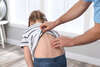
A clinical examination—including the Adams test and measurement with a scoliometer—can detect and quantify trunk asymmetry. When indicated, X-rays can confirm and measure scoliosis, particularly using the Cobb angle.
At the Spinal Chiropractic Center in Paris, we offer a personalized evaluation of scoliosis and, depending on the situation, various conservative treatment strategies, including the ScoliBrace® brace and specific exercises tailored to scoliosis.
If you have any questions about scoliosis or its progression, please contact us or schedule an appointment for an evaluation.