

Spinal Pain and Disorders
Why should you see a chiropractor?
- Neck and Upper Limb
- Neck pain
- Torticollis
- Cervicobrachial neuralgia
- Pain radiating into the arm
- Certain headaches of cervical origin
- Back, Lower Back, and Lower Limb
- Low Back Pain and Lumbago
- Back Pain
- Sciatica and cruralgia
- Herniated Disc
- Pain or tingling in the leg
- Sacroiliac Joint Pain
- Posture and the Spine
- Postural Disorders
- Scoliosis
- Hypercyphosis
- Hyperlordosis
- Pelvic Imbalances
- Pain in the tailbone
The main reasons for seeking medical advice
LOMBALGIE
What is lumbago?
Low back pain refers to pain located in the lower back, in the lumbar region. It can occur suddenly, as with lumbago, or develop gradually and become persistent.
In many cases, low back pain is described as “nonspecific”: it does not necessarily correspond to a specific lesion visible on imaging. A clinical examination helps identify its characteristics and any signs that may require further testing or medical consultation.
What are the common causes of lower back pain?
Lower back pain can be influenced by various factors: mechanical stress, unusual physical activity, repetitive movements, a sedentary lifestyle, or a lack of physical fitness.
Changes in the intervertebral discs or spinal joints may also be present, though they are not necessarily the cause of the pain. More rarely, low back pain may indicate a condition that requires specific medical treatment.
A clinical examination is therefore essential for guiding treatment.
When should you see a chiropractor for lower back pain?
A medical consultation may be considered when lower back pain persists, recurs, or limits movement and daily activities.
At the office, a clinical examination is used to assess mobility, function, and the possible presence of neurological signs. Treatment is then tailored to the patient's specific situation and may include a combination of chiropractic care, exercises, and personalized advice.
If there are signs that warrant further evaluation, imaging or a medical consultation may be recommended.
SCIATIC
What is sciatica?
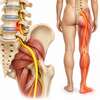
Sciatica is pain caused by irritation or compression of a lumbar nerve root that is part of the sciatic nerve.
The pain may start in the lower back or buttock and radiate down the leg, sometimes all the way to the foot. It may be accompanied by tingling, numbness, and, in some cases, decreased muscle strength.
A herniated disc is a common cause of sciatica, but it is not the only possible cause.
What are the symptoms of sciatica?
The pain typically follows the path of a nerve root from the lower back or buttock down to the thigh, leg, and sometimes the foot. Its location varies depending on which nerve root is affected.
Tingling, numbness, or decreased sensation may also be present. Particular attention should be paid to muscle weakness.
The neurological examination is used, in particular, to assess sensation, muscle strength, and reflexes in order to detect nerve root involvement.
How is sciatica diagnosed and treated?
Treatment begins with a clinical and neurological examination to identify the location of the condition and determine its probable cause.
Depending on the situation, treatment may combine appropriate chiropractic techniques, exercises, and advice aimed at maintaining or gradually restoring mobility and function. Imaging, particularly an MRI, is not routinely performed but may be indicated in certain situations.
If you experience significant or progressive muscle weakness, urinary or bowel problems, or a loss of sensation in the perineal area, you should seek urgent medical attention.
DISCAL HERNIA
What is a herniated disc?
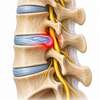
Intervertebral discs are located between the vertebrae and help with mobility as well as the distribution of stress on the spine.
A herniated disc occurs when part of the disc protrudes beyond its normal boundaries. It may be completely asymptomatic or, when it irritates or compresses a nerve root, cause radiating pain, tingling, numbness, or sometimes muscle weakness.
Herniated discs occur primarily in the lumbar and cervical regions.
What are the symptoms of a herniated disc?
A herniated disc does not necessarily cause symptoms. When it irritates or compresses a nerve root, the symptoms vary depending on its location.
In the lumbar region, it can cause sciatica or cruralgia, with pain radiating down the leg. In the cervical region, the pain may radiate to the shoulder, arm, or hand.
Tingling, numbness, changes in sensation, or muscle weakness may also be present.
How is a herniated disc diagnosed and treated?
The evaluation is based primarily on a clinical and neurological examination to identify any nerve root involvement and assess its severity.
Depending on the situation, treatment may include appropriate chiropractic care, exercises, and advice aimed at gradually restoring mobility and function. An MRI may be indicated when symptoms persist, when neurological signs are present, or when the results are likely to change the course of treatment.
A referral to a medical or surgical specialist is necessary when the examination reveals certain signs of severity or a significant or progressive neurological deficit.
CERVICALGIA
What is neck pain?
Neck pain refers to pain in the neck. It can be acute or chronic and may be accompanied by stiffness or limited head movement.
Neck pain can be influenced by various factors, including mechanical stress, maintaining certain positions for prolonged periods, physical activity, or age-related changes.
When neck pain is accompanied by symptoms that radiate into the arm, such as tingling, numbness, or muscle weakness, a neurological examination is particularly important.
How is neck pain evaluated and treated?
The evaluation begins with a clinical examination of cervical mobility, function, and factors that may influence symptoms. A neurological examination is performed when the pain is accompanied by symptoms in the arm or hand.
Depending on the situation, treatment may combine appropriate chiropractic care, exercises, activity recommendations, and work on certain postural or mechanical factors.
Imaging is not always necessary. It may be indicated based on the clinical examination, trauma, persistent symptoms, or certain neurological signs.


BACK PAIN
What is back pain?
Back pain refers to pain located in the thoracic region of the spine, between the cervical and lumbar regions.
It may be associated with mechanical stress, certain prolonged postures, reduced mobility, or muscle strain.
Since chest pain can sometimes have causes other than musculoskeletal issues, the clinical examination also helps identify signs that may require medical consultation or further testing.
How is back pain evaluated and treated?
The evaluation of back pain is based on a clinical examination of the thoracic spine, its range of motion, and the surrounding structures. It also helps identify factors that may indicate a non-musculoskeletal cause of the pain.
When conservative treatment is appropriate, care may include appropriate chiropractic techniques, exercises, and advice aimed at improving mobility and function.
If the examination reveals any unusual findings or signs suggestive of another condition, a medical consultation or additional tests may be recommended.
When should you see a doctor for back pain?
A medical consultation may be considered when back pain persists, recurs, or limits daily activities.
An evaluation is particularly important when pain occurs after an injury and is accompanied by unusual symptoms, fever, shortness of breath, or a change in general health.
The purpose of the examination is to determine whether the pain appears to be musculoskeletal in origin or whether a referral to a medical specialist and further testing are necessary.
HYPERCYPHOSIS
What is hyperkyphosis?
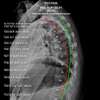
Hyperkyphosis is an excessive increase in the natural curvature of the thoracic spine, giving the upper back a more rounded appearance.
It can be linked to various factors: posture, structural changes in the vertebrae, Scheuermann's disease in young people, or, in older adults, vertebral compression fractures, particularly in the presence of osteoporosis.
A clinical examination allows for an assessment of posture, spinal mobility, and whether the deformity is flexible or more structural in nature. An X-ray may be indicated in certain situations.
How is hyperkyphosis evaluated and managed?
The evaluation takes into account age, spinal mobility, the degree of curvature, and whether the curvature is postural or structural. When indicated, X-rays are used to measure kyphosis and analyze the morphology of the vertebrae.
Treatment depends on the cause and may include specific exercises, mobility and strengthening exercises, and, in some cases, appropriate postural correction techniques.
If osteoporosis, vertebral compression fractures, or significant or progressive deformity is present, a further medical evaluation may be necessary.
Can hyperkyphosis be corrected?
It depends on the cause of the hyperkyphosis, its severity, its flexibility, and the patient's age.
Hyperkyphosis that is primarily postural and flexible can generally be improved through a combination of mobility exercises, muscle strengthening, and postural correction. When it is more structural in nature, the goal is primarily to improve function and posture and, when possible, to slow its progression.
Treatment must therefore be tailored to the individual following a clinical evaluation and, when necessary, an X-ray examination.
LUMBAGO
What is lumbago?
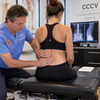
Lumbago refers to acute low back pain—that is, pain that comes on suddenly in the lower back. It can be severe and may be accompanied by a feeling of stiffness or a significant limitation of movement.
Lumbago is most often caused by musculoskeletal issues, and its prognosis is generally favorable. Severe pain does not necessarily indicate a significant spinal injury.
A clinical examination allows for an assessment of the situation and helps identify any signs that may require further testing or a medical consultation.
What should you do if you have lumbago?
Despite the pain, it is generally better to maintain an appropriate level of activity and gradually resume movement rather than remain completely at rest.
A clinical examination helps identify restricted movement, assess function, and look for any neurological signs. Depending on the situation, treatment may include tailored chiropractic care, exercises, and activity recommendations.
Imaging is generally not necessary for a recent episode of lumbago if there are no specific symptoms.
When should you seek immediate medical attention for lower back pain?
A prompt medical evaluation is recommended when pain occurs after a significant injury and is accompanied by fever, a decline in general health, or significant or progressive muscle weakness.
Urinary or bowel problems accompanied by a loss of sensation in the perineal region require urgent medical attention.
Apart from these situations, lumbago can generally be treated with appropriate conservative measures following a clinical examination.
CERVICO-BRACHIAL NEURALGIA
What is cervicobrachial neuralgia?
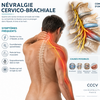
Cervicobrachial neuralgia is pain caused by irritation or compression of a nerve root in the cervical spine.
The pain may originate in the neck and radiate to the shoulder, arm, forearm, or hand. It may be accompanied by tingling, numbness, changes in sensation, and sometimes a decrease in muscle strength.
Cervical disc herniation or degenerative changes in the cervical spine may be among the causes.
How can you identify the cause of cervicobrachial neuralgia?
The evaluation is based on a medical history and a clinical and neurological examination to assess cervical mobility, sensation, muscle strength, and reflexes.
The goal is, in particular, to determine whether a nerve root is affected and to distinguish between a cervical origin and other possible causes of arm pain.
A cervical MRI may be indicated when symptoms persist, when a neurological deficit is present, or when the results are likely to change the course of treatment.
How is cervicobrachial neuralgia treated?
Treatment depends on the identified cause, the severity of the symptoms, and whether any neurological signs are present.
When conservative treatment is indicated, it may include tailored chiropractic care, exercises, and guidance aimed at maintaining or gradually restoring mobility and function.
Significant or progressive muscle weakness, difficulty walking, or other unusual neurological symptoms require prompt medical evaluation.
ARTHROSE
What is spinal osteoarthritis?
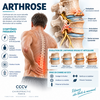
Osteoarthritis involves progressive degenerative changes in the joints. In the spine, it can affect the posterior joints in particular and be accompanied by changes in the intervertebral discs.
These changes become more common with age and may be present without causing pain. When they are symptomatic, they may be associated with pain, stiffness, or reduced mobility.
It is therefore important to interpret X-rays or MRI images in light of the symptoms and clinical examination, rather than automatically assuming that visible osteoarthritis is the cause of the pain.
Is it possible to relieve the symptoms of osteoarthritis?
Osteoarthritis cannot be “cured,” but its symptoms and functional effects can often be alleviated.
Engaging in appropriate physical activity, performing mobility and strengthening exercises, and using certain manual techniques can help reduce pain and preserve function.
Treatment must be tailored to the patient's age, overall health, the location of the osteoarthritis, and, above all, the patient's symptoms.
When should you see a doctor for spinal osteoarthritis?
It may be helpful to see a doctor if pain or stiffness persists, recurs, or begins to limit daily activities.
A clinical examination is used to assess mobility and function and to look for any neurological signs. Treatment is then tailored to the symptoms rather than solely to the abnormalities visible on imaging studies.
Unusual or rapidly progressing pain, trauma, or the onset of muscle weakness or other neurological signs require appropriate medical evaluation.
SCOLIOSIS
What is scoliosis?
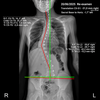
Scoliosis is a three-dimensional deformity of the spine characterized by a curvature in the frontal plane and rotation of the vertebrae.
It frequently appears during growth, but may also be present or develop in adulthood. Its evaluation takes into account, in particular, age, remaining growth potential, and the severity and location of the curvatures.
A clinical evaluation and, when indicated, an X-ray examination allow for the objective measurement of scoliosis and monitoring of its progression.
How is scoliosis evaluated?
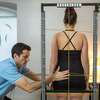
The evaluation combines clinical and postural examination with objective measurements, including observation of trunk asymmetries, the Adams test, and measurement of rotation using a scoliometer.
When indicated, X-rays are used, among other things, to measure the Cobb angle, analyze spinal curvatures, and monitor their progression over time.
The frequency of follow-up depends, among other things, on age, remaining growth potential, and the risk of scoliosis progression.
How is scoliosis treated?
Treatment depends on the patient’s age, remaining growth potential, the type of curvature, and how it progresses. Depending on the situation, treatment may include monitoring, specific exercises, and, for some growing patients, wearing a brace.
At the CCCV, the goal is to accurately assess scoliosis and monitor its progression in order to tailor treatment to each patient.
To learn more, visit our dedicated page: Scoliosis: Evaluation and Treatment in Paris.
Question 11 — Can I consult the CCCV about scoliosis?
Yes. The CCCV treats patients with scoliosis, both adolescents and adults.
The evaluation takes into account , among other factors , the patient’s age, growth, the type and severity of the curvatures, their progression, as well as the patient’s symptoms and function. The clinical analysis is supplemented, when indicated, by radiographic measurements, including the Cobb angle.
Depending on the situation, conservative treatment may combine appropriate chiropractic care, specific exercises, and postural correction. For certain types of scoliosis, particularly in growing adolescents, the option of bracing may also be considered.
When the situation calls for it, referral to or additional care provided by other healthcare professionals is recommended.
Question 12 — Do you treat adolescents with scoliosis?
Yes. The CCCV sees adolescents with scoliosis to perform a clinical, postural, and radiographic evaluation when indicated.
In adolescents, remaining growth potential is a particularly important factor. The evaluation takes into account, among other things, age, skeletal maturity, the degree of curvature as measured bythe Cobb angle, and whether the curvature is progressing.
Based on this information, various conservative treatment strategies can be considered, including scoliosis-specific exercises and, when medically indicated, treatment with a brace.
At the CCCV, a ScoliBrace® three-dimensional corrective brace may be recommended when it is appropriate for the adolescent’s condition, with follow-up and reevaluations as the adolescent grows.