

Evaluation and Treatment of Scoliosis in Paris
Scoliosis is a three-dimensional deformity of the spine that requires a thorough evaluation.
At the Spinal Chiropractic Center, we evaluate posture, trunk rotation, and—when indicated—X-ray findings in order to provide care tailored to each patient.
Understanding Scoliosis
Scoliosis can develop during growth, but it also affects adults. Its progression depends, in particular, on age, growth potential, and the severity and location of the curves.
In children and adolescents, special attention is paid to the risk of progression during periods of rapid growth. In adults, the evaluation also takes into account any pain, function, and the overall alignment of the spine.
Clinical Evaluation of Scoliosis
The evaluation begins with a clinical and postural examination to assess trunk and pelvic balance, shoulder asymmetries, and any trunk rotations.
The Adams test, performed while bending forward, is particularly useful for identifying a hump. A scoliometer measurement then quantifies trunk rotation and provides an objective measurement for follow-up.
Radiographic Analysis
When indicated, X-rays provide a precise assessment of scoliosis and the overall alignment of the spine.
The analysis includes, in particular, measurement of the Cobb angle, an examination of the various curvatures and their locations, as well as certain parameters used to assess vertebral rotation and alignment.
These measurements provide objective and reproducible data that are useful for monitoring the progression of scoliosis and adjusting treatment.
The Corset and ScoliBrace®
For some growing patients with progressive scoliosis, wearing a brace may be recommended to reduce the risk of the curve worsening.
The ScoliBrace® is a brace custom-designed based on the patient’s body shape and the three-dimensional characteristics of their scoliosis. It is designed to apply specific corrective forces while promoting expansion in the targeted areas.
The choice of brace, the duration of wear, and follow-up care are tailored to each individual based on age, remaining growth potential, the type of curvature, and its progression.
ScoliCare: A Holistic Approach
ScoliCare is a specialized approach to the evaluation and non-surgical management of scoliosis in children, adolescents, and adults.
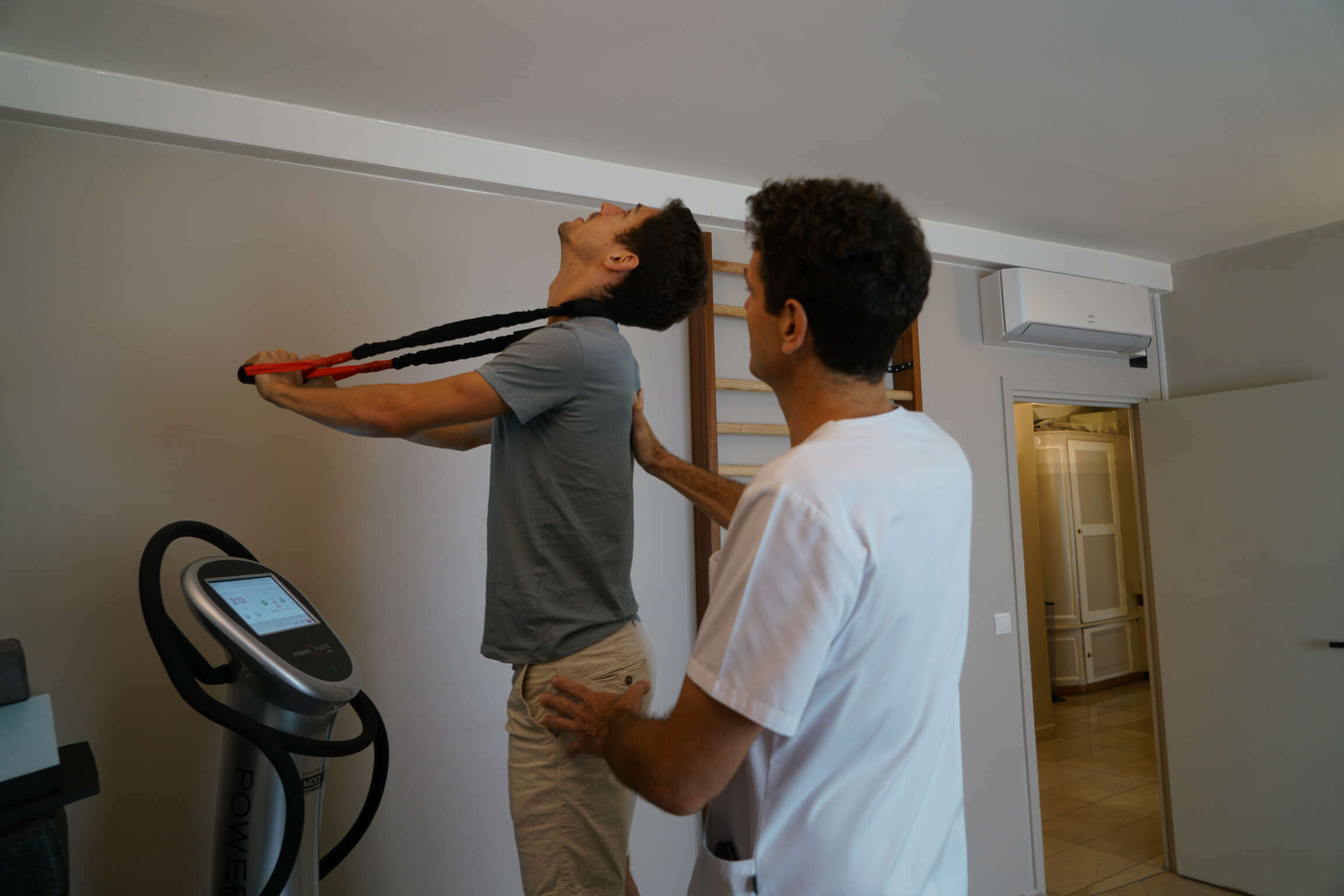
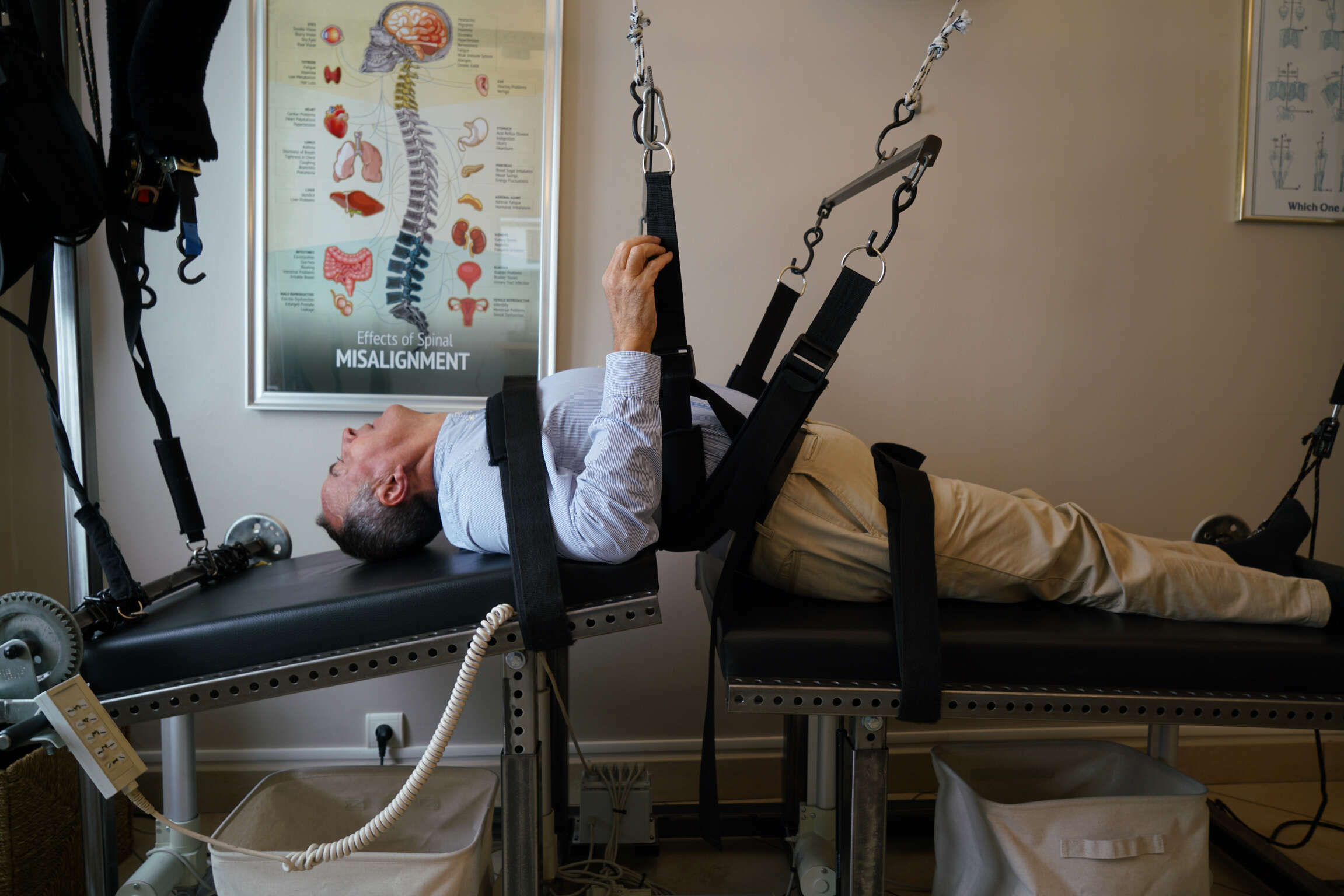

It combines an accurate assessment of the deformity, monitoring of its progression, and—when indicated—various treatment strategies, including specific exercises and the ScoliBrace® brace.
At our practice, this approach is integrated into our care plan to provide personalized, regularly reassessed follow-up care.
Reassess to Measure Progress
Regular follow-up is an essential part of scoliosis care. It helps determine whether the curvature is stable, improving, or worsening.
Clinical examinations, scoliometer measurements, and—when indicated—radiographic measurements allow for an objective comparison of changes over time.
This reassessment allows for adjustments to the treatment plan based on the patient's growth, the progression of the scoliosis, and the response to treatment.
When should you see a doctor?
An evaluation is particularly recommended when shoulder or pelvic asymmetry, a change in posture, or a hump when bending the trunk is observed.
In children and adolescents, a diagnosed case of scoliosis requires close monitoring during growth spurts, as this is when the risk of progression may be greatest.
In adults, a consultation may also be recommended in cases of pain, a gradual change in posture, or a previously diagnosed case of scoliosis that requires follow-up.
Why is early detection important?
In children and adolescents, the risk of scoliosis progression depends primarily on the severity of the curvature and the remaining growth potential.
Identifying scoliosis early enough therefore makes it possible to monitor its progression and, when necessary, to consider conservative treatment while the patient is still growing and there are still opportunities for intervention.
Not all cases of scoliosis progress, and not all require the same treatment. The decision depends on several factors: Cobb angle, age, bone maturity, location of the curve, documented progression, and clinical context.
Scoliosis in Children and Adolescents
Idiopathic adolescent scoliosis usually develops during growth. Its course varies: some curvatures remain stable, while others may progress, particularly when there is still significant growth potential.
The assessment of the risk of progression takes into account, among other factors, the Cobb angle, age, bone maturity, growth stage, and changes in the curvature over time.
Depending on these factors, treatment can range from simple monitoring to scoliosis-specific exercises and, for certain progressive curves in adolescents who are still growing, the use of a brace.
The goal is to detect any progression early enough to adjust the treatment strategy and, when possible, limit the worsening of the deformity during growth.
When should you seek a specialist's opinion?
Scoliosis sometimes requires a specialized medical evaluation in addition to conservative management. Referral is particularly important when the curvature is progressing rapidly, when it is severe or atypical, or when the clinical presentation includes unusual features.
A medical consultation should be considered, in particular, if there are neurological signs, muscle weakness, persistent sensory disturbances, severe or unusual pain, very early onset of scoliosis, or rapid progression during growth.
For severe or progressive scoliosis, particularly in children and adolescents, consulting with a spine specialist allows for a discussion of the various treatment options and their indications.
Frequently Asked Questions About Scoliosis
Can scoliosis be corrected?
This depends, in particular, on age, growth potential, the type of scoliosis, and its severity. In growing adolescents, certain conservative treatments are primarily aimed at limiting progression and, in some cases, can improve certain aspects of the deformity. In adults, the goals more often focus on symptoms, function, balance, and preventing further worsening.
When might a corset be recommended?
For growing children and adolescents, a brace may be recommended when the risk of scoliosis progression is deemed significant enough. The decision depends, in particular, on the Cobb angle, remaining growth potential, and the observed progression of the condition.
Does scoliosis always cause pain?
No. Scoliosis can be present without causing pain, particularly in adolescents. In adults, some cases of scoliosis may be associated with pain or functional limitations, although there is no simple correlation between the severity of the curvature and the intensity of the symptoms.
Is it always necessary to take an X-ray?
No. The decision to order an X-ray depends on the clinical examination, the patient’s history, and the need to confirm, measure, or monitor scoliosis. When indicated, an X-ray is used, among other things, to measure the Cobb angle and accurately assess the deformity.
Can you play sports if you have scoliosis?
In most cases, physical activity is encouraged. Any necessary adjustments depend on the individual’s situation, symptoms, and the recommendations of the healthcare professionals treating the patient.
Getting a Scoliosis Evaluation in Paris
Would you like to have scoliosis evaluated or get a second opinion on its progression? The Spinal Chiropractic Center welcomes you in Paris 7 for a clinical and postural evaluation to determine the best course of action for your situation.

The chiropractors at the Centre Chiropractic de la Colonne Vertébrale are Scolicare and Scolibalance certified.
Can ScoliCare® help avoid surgery?
For some adolescents with progressive scoliosis, appropriate conservative management can help reduce the risk of progression to curvatures that might warrant consideration of surgery.
However, it is not possible to guarantee that conservative treatment will prevent the need for surgery. This depends, in particular, on the severity of the scoliosis, its progression, and the patient’s remaining growth potential.
For further reading
You can also check out our articles on various aspects of scoliosis:
• The ScoliBrace® brace and available scientific data
• Scoliosis in adults
• Watchful waiting or intervention following a scoliosis diagnosis
• Understanding scoliosis surgery
• Scoliosis and sciatica: What’s the connection?
Scientific References
- Negrini S. et al. — SOSORT Guidelines
International recommendations for the evaluation and conservative treatment of idiopathic scoliosis during growth.
View the scientific article - Weinstein SL, et al. — Bracing in Adolescent Idiopathic Scoliosis, NEJM
A major study demonstrating the benefits of bracing in reducing the risk of progression to the surgical threshold in selected adolescents.
View the study - Schreiber S. et al. — Schroth Physiotherapeutic Scoliosis-Specific Exercises
A randomized clinical trial investigating the benefits of specific Schroth exercises combined with standard care.
View the study - Asher MA, Burton DC — Adolescent Idiopathic Scoliosis: Natural History
A seminal publication on the natural history and progression of adolescent idiopathic scoliosis.
View the article